What to Do When a Stray Dog Approaches: A Step-by-Step Guide
Stop, stand side-on, put something between you, stay quiet and back away slowly — plus when a handheld dog repeller helps and what to do after a bite.
Most dogs that come towards you on the street aren't attacking. They're guarding their territory, curious, or chasing something that moves fast. Knowing what to do in advance keeps those few seconds calm.
1. Stop — don't run
Running triggers the chase instinct. Slow down and keep your arms close to your body.
2. Stand side-on and avoid eye contact
A direct stare reads as a challenge. Turn your body slightly to the side and keep the dog in your peripheral vision.
3. Put something between you
A bag, an umbrella or a bicycle — anything between you and the dog helps keep your distance.
4. Stay quiet and still
Shouting raises the dog's arousal rather than calming it. Stay quiet, keep your hands still and don't hit the dog.
5. Back away slowly
Once the dog stops, move away step by step without turning your back on it.
When does a dog repeller help?
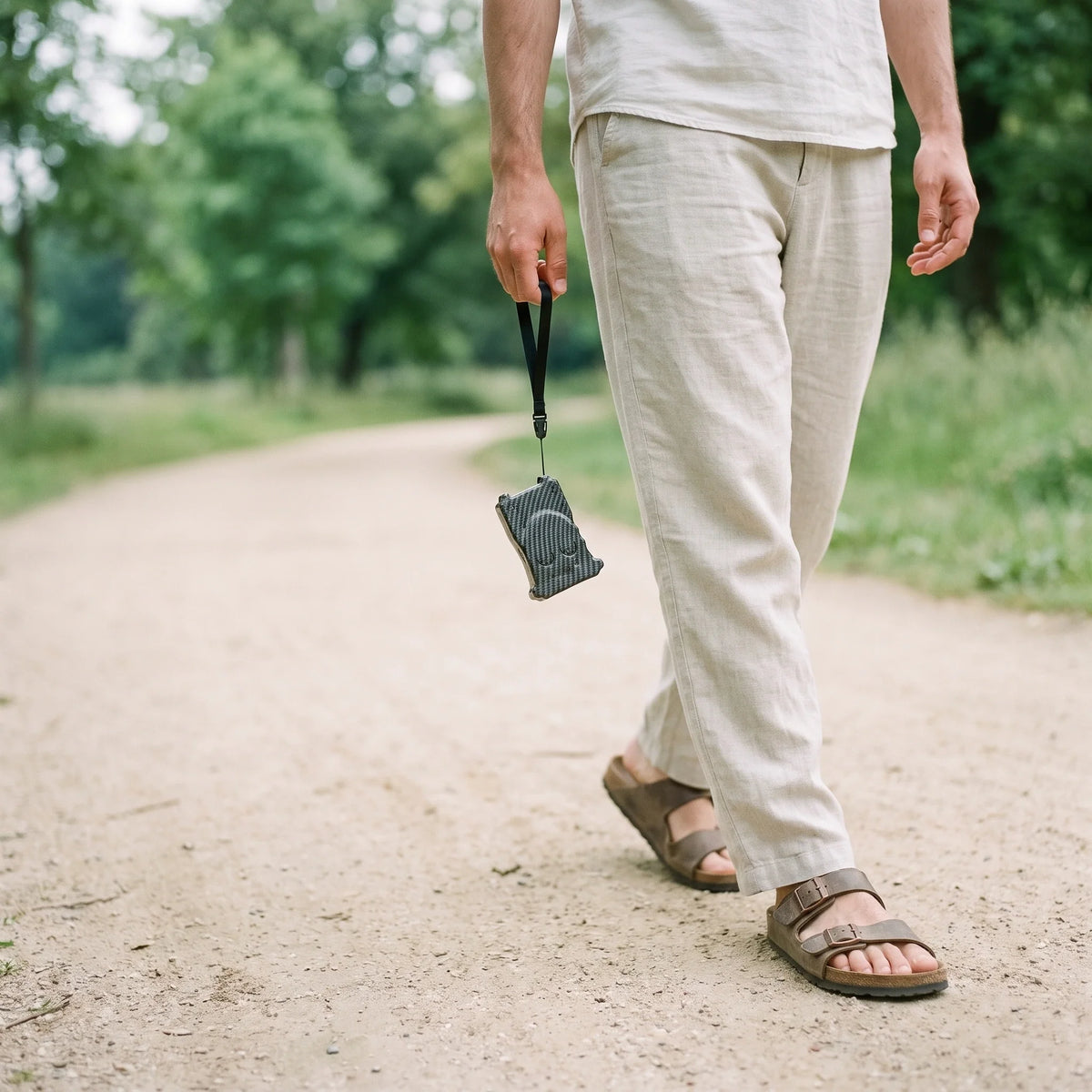
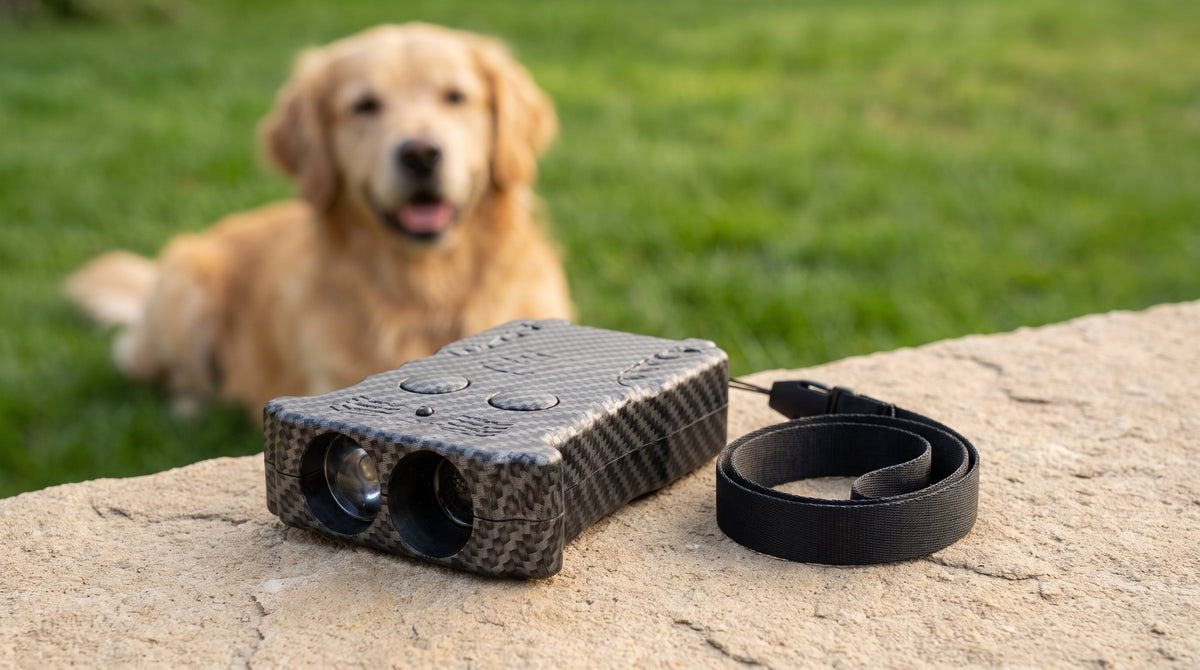
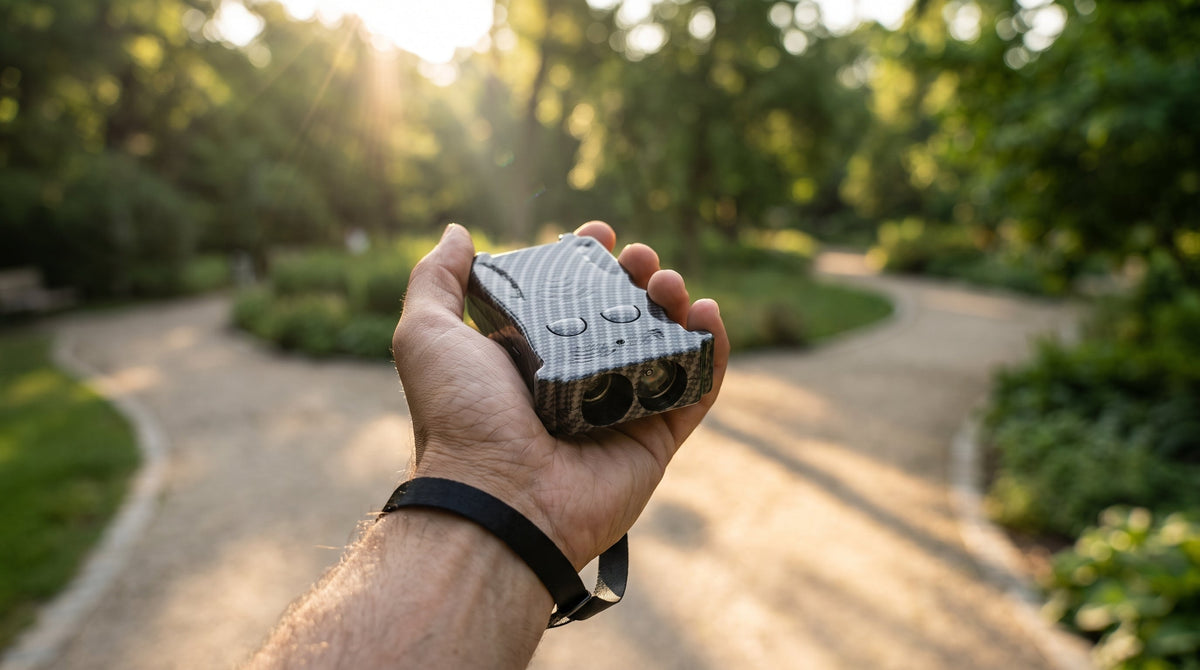
A handheld dog repeller doesn't replace these steps; it strengthens them. Point it at the dog when it is 5–10 metres away and press the button: most dogs stop or back off. It doesn't work on every dog, so stay calm and keep moving away while you use it. The SONIK TP-10 is designed for walks and short trips; the rechargeable MAXON TP-20 is effective up to 15 metres.
Plan your route
Feeding spots, bins and building sites tend to gather dogs. Choose a route away from them where you can, and take extra care early in the morning and late in the evening.
If you're bitten
Wash the wound straight away with plenty of soap and water for at least 15 minutes and get medical care without delay — a bite needs to be assessed for rabies risk. Report an aggressive dog to your local authority.
For more on why deterrents behave differently with different dogs, see Do cat and dog repellers actually work?